
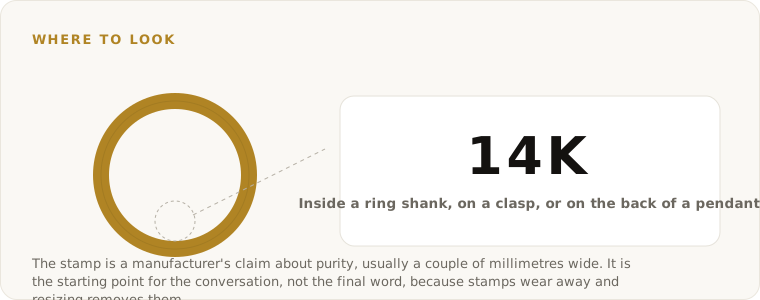
Most gold jewellery carries a tiny stamp somewhere on it: inside a ring band, on the clasp of a chain, on the back of a pendant. It is easy to miss, and it is worth finding, because that stamp is the manufacturer's own claim about how much gold is actually in the piece.
The karat number
Gold on its own is soft, so jewellery is almost always mixed with other metals for strength. Karat measures how much of that mix is pure gold, out of 24 parts.
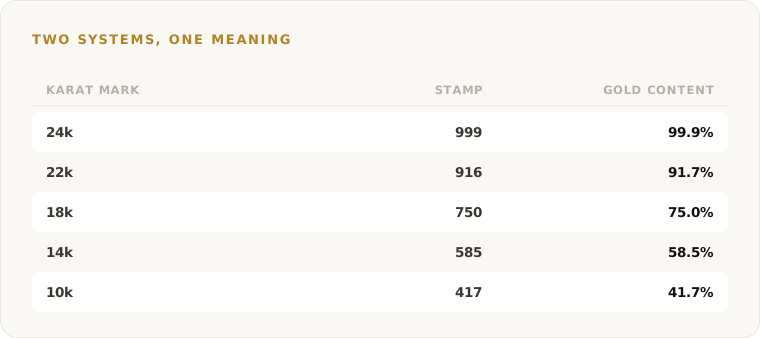
- 24k: pure gold (rare in everyday jewellery, since it is too soft to hold its shape)
- 18k: 18 parts gold, 6 parts other metal (75 percent gold)
- 14k: 14 parts gold, 10 parts other metal (58.3 percent gold)
- 10k: 10 parts gold, 14 parts other metal (41.7 percent gold), the minimum karat legally sold as gold in Canada
The European numbers mean the same thing
If your stamp reads 417, 585 or 750 when you come to sell gold in Kelowna instead of a karat number, you are looking at the same scale written as a percentage: 750 is 18k, 585 is 14k, 417 is 10k. Older or imported pieces often use this format.
Watch for the letters, not just the numbers
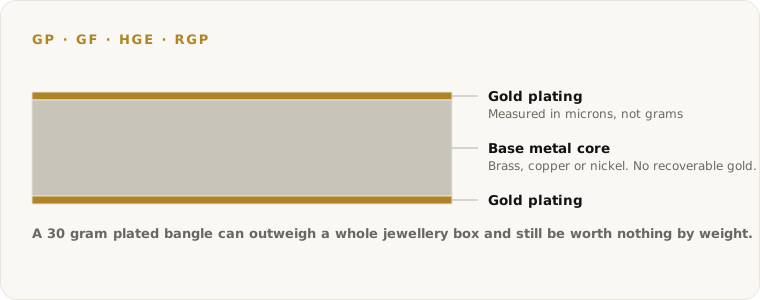
Stamps like GP, GF, HGE or RGP are not karat marks. They stand for gold plated, gold filled, heavy gold electroplate and rolled gold plate, and they mean a thin layer of gold sits over a base metal. These pieces can still be attractive and wearable, but they carry only a fraction of the value of solid gold, and the full calculation that follows once purity is confirmed is worked through in how much is my gold worth in Kelowna, because most of what you are weighing is not gold at all.
A stamp is a starting point, not a verdict
Stamps wear away, and not every piece is stamped at all, especially older or handmade jewellery. That is normal.
A missing stamp is not a dead end. It just means the piece gets weighed and tested on the spot instead of read off a mark.
That is exactly why every item gets tested on our scale during a free estimate and checked against the day's market price ourselves, rather than priced off a stamp alone.
How testing works when the stamp is missing or worn
Missing stamps are normal, not suspicious. A stamp sits on the inside of a ring shank or on a clasp, which are precisely the surfaces that rub against skin and fabric for forty years. Resizing removes stamps routinely, because the resized section is new metal. Plenty of older and handmade pieces were never stamped at all.
So buyers test rather than read. Electronic testing places a probe against the metal and reads its properties, returning a karat value without marking the piece. Acid testing uses a touchstone: the item is rubbed across the stone to leave a small streak of metal, then graded acids are applied to that streak. A streak of 14k survives the 14k acid and dissolves under the 18k acid, which brackets the purity precisely. The stone gets marked, not your jewellery.
Where plating is suspected, a small file mark on an inconspicuous edge shows whether the gold continues into the metal or stops at the surface. That one is visible, so any decent buyer asks first. The important point for a seller is simple: an unstamped piece is not worth less than a stamped one of the same purity. It just takes an extra thirty seconds to confirm.
Silver stamps, and why they get confused with gold
A large share of the questions we get about marks are about silver, not gold, because the marks sit in the same place and look similar at a glance.
The key silver marks are 925, Sterling and Ster, all of which mean sterling silver at 92.5 percent purity. 800 and 830 appear on continental European silver at lower purities. 999 or Fine Silver indicates near-pure bullion. None of these are gold marks, and 925 in particular is often misread as a gold purity number by people who know that 750 means 18k. If that is what you have, the page on selling silver in Kelowna covers how it is valued.
Then there are the plate marks, which are the ones that cost people their expectations: EPNS, EP, A1, Silver on Copper, or a maker's name with no purity figure anywhere. These are a microscopically thin silver layer over nickel, copper or brass, and there is not enough recoverable metal in them to be worth buying. A sterling tray and a plated tray of identical size can differ in value by a factor of a hundred, and the only thing separating them is a mark a few millimetres wide.
Marks that tell you something other than purity
Not every stamp is about metal content. Maker's marks and sponsor's marks identify who made or sponsored the piece. Assay office marks on British and European jewellery record where and when it was tested, and on older pieces a date letter can identify the exact year. Country of origin marks, patent numbers and design registration numbers all appear too.
None of these change the metal value by a gram, but they can matter in a different way. A recognised maker's mark on an antique or designer piece occasionally means the item is worth more intact than melted, and a buyer who notices that and tells you is a buyer worth dealing with. It is one reason to have a piece looked at by someone who manufactures jewellery rather than someone who only weighs it.
Frequently asked questions
Is 14k or 18k gold worth more?
18k contains more pure gold by weight than 14k, so a piece is generally worth more per gram, though total value also depends on the piece's weight and the current market price.
What if my jewellery has no stamp at all?
We test every item on site regardless of whether it is stamped, so an unmarked piece can still be assessed accurately.
Does gold plated jewellery have any value?
It can, but the value comes mostly from the base metal and craftsmanship rather than gold content, since only a thin surface layer is gold.
Does 925 mean my jewellery is gold?
No. 925 is the sterling silver mark and means the piece is 92.5 percent silver. It is frequently mistaken for a gold purity number because gold uses a similar three-digit system, where 750 means 18k and 585 means 14k. If your piece is stamped 925, Sterling or Ster, it is silver, and it is valued against the silver market rather than the gold market.
What does a maker's mark or assay mark tell me?
Those marks identify who made or sponsored the piece and, on British and European jewellery, where and when it was tested, sometimes down to the exact year. They say nothing about purity, which is carried by the separate karat or millesimal mark. They can still matter, because a recognised maker's mark occasionally means an antique or designer piece is worth more intact than it would be as metal.